
Here are some real-life examples of famous musicians’ experiences with copyright, master recordings, and ownership:
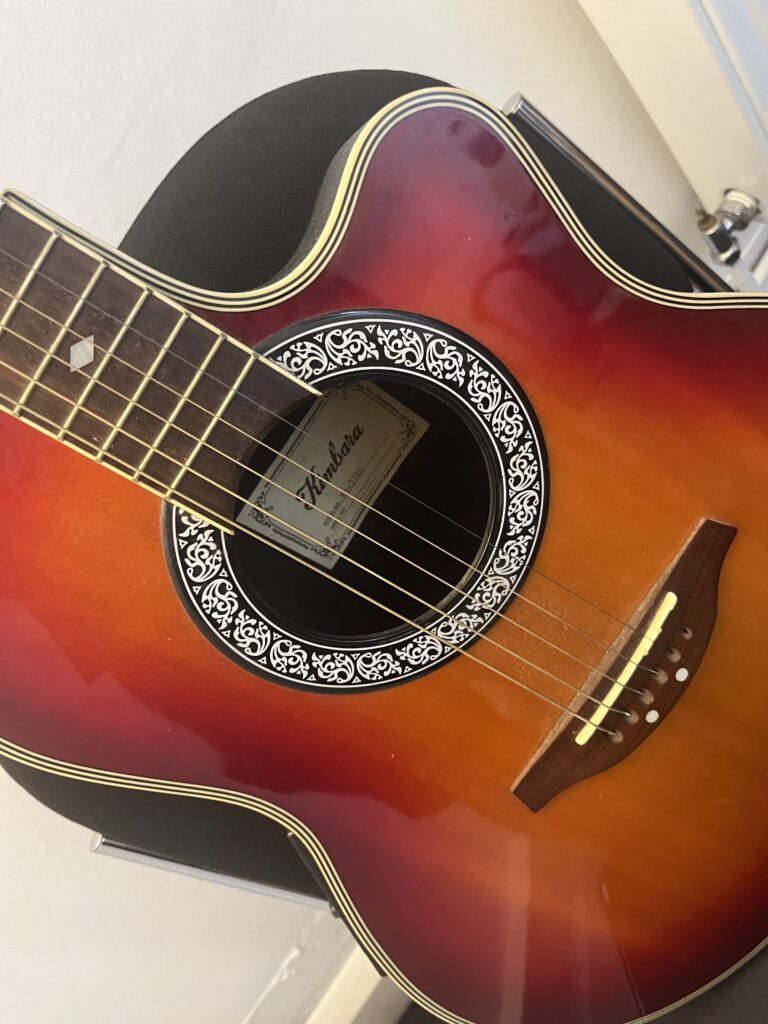
An old photo of my very first guitar, taken in 1982, by the way!
Swift Swift and Her Masters
Background: Taylor Swift has made no secret of her battle to reclaim her master recordings. At the age of 15, she signed her first record contract with Big Machine Records, which also held her master recordings.
- Swift’s first six album masters were part of Big Machine Records, which Scooter Braun’s business, Ithaca Holdings, purchased in 2019.
- Swift criticised the sale, saying she didn’t have the chance to purchase her masters herself, and she wanted to own them.
- Swift responded by deciding to take control of new master recordings by rerecording her first six albums. Known as “Taylor’s Version,” these re-recordings give her ownership of the masters and authority over their usage.
Significance:
- This case emphasises how crucial it is to comprehend recording contract terms, particularly those pertaining to master ownership.
- Additionally, it demonstrates that musicians can take action to regain control, even if that means rerecording their own songs.
Prince and Domination in Music
Background: Prince’s dispute over music control with Warner Bros., his record label, made him famous.
In conclusion
- To obtain control over his master recordings, Prince and Warner Bros. got into a public argument in the early 1990s.
- He famously protested by writing “Slave” on his face and changing his name to an unpronounceable symbol because he was frustrated with his contractual restrictions.
- Prince eventually secured an agreement that returned control of his master recordings and unfettered music releases.
Importance
- Prince’s battle highlights the significance of artists’ rights to their creative output and the challenges of reclaiming those rights.
- It also shows how artists who desire greater control could benefit from independent releases.
The Beatles and Publication Rights
Context: Despite having one of the most famous song catalogues in history, the Beatles’ song ownership has proven to be a difficult issue.
Finally
- In the 1960s, The Beatles’ publishing rights were managed by Northern Songs, a company founded by John Lennon, Paul McCartney, and their manager Brian Epstein.
- Northern Songs was eventually acquired by ATV Music, which Michael Jackson later purchased in 1985 along with the Beatles’ back catalogue.
- Since then, Paul McCartney has tried to regain control over the rights to his songs by using legal provisions that allow songwriters to regain their publishing rights after a certain period of time.
Importance:
- The complexities of music publishing and how early business choices impact artists’ long-term control over their work are illustrated by this example.
- It highlights the legal channels available to artists to reclaim their rights.
Kanye West and Record Contracts
Background: Kanye West has been outspoken about artists’ rights and has revealed details of his own record deals in an attempt to encourage industry change.
Finally,
- In 2020, Kanye West posted his record contracts on social media, highlighting the restrictive nature of typical record deals.
- He called for reforms in the music industry to provide more transparency and better terms for artists, including ownership of master recordings.
- West’s public stance has fueled discussions about fairer contracts and greater artist empowerment.
Significance:
- The necessity of openness and equitable procedures in the music business is highlighted by Kanye West’s actions.
- They also emphasise how crucial it is for artists to comprehend their contracts and fight for better conditions.
These illustrations highlight the various obstacles and approaches that artists encounter with regard to ownership, master recordings, and copyright. They emphasise how crucial it is to manage one’s music career with knowledge and initiative.


